By Rokan, Owner of SANIKB
A kitchen sink may look like a finishing choice, but it affects cabinet construction, countertop fabrication, plumbing, workflow, and long-term maintenance. Homeowners can avoid expensive changes by settling several details before the sink base is ordered.
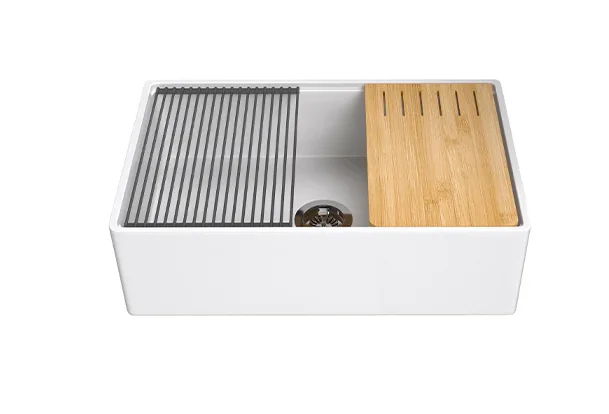
First, choose the mounting style early. A farmhouse or apron-front sink needs a cabinet made or modified to expose the front of the basin. An undermount sink requires accurate countertop fabrication and a secure support system. A drop-in model has different cutout and edge requirements. These options are not interchangeable at the last minute without affecting labor and materials.
Second, work from the technical drawing, not the product’s nominal size. A “33-inch” label is a category name, not a substitute for the exact outside dimensions, apron height, bowl depth, drain location, corner radius, and mounting detail. The cabinetmaker, countertop fabricator, installer, and plumber should all use the same current drawing. This is especially important with handcrafted materials such as fireclay, where an installer should verify the actual sink before making the final cut.
Third, plan structural support independently of the countertop. A heavy basin should rest on framing or a support cradle designed for its filled weight. The countertop edge and silicone seal are not the primary support system. The cabinet also needs enough usable interior space for the drain assembly, supply lines, disposal if specified, and future service access.
Fourth, confirm how the faucet and accessories will fit around the sink. Check the faucet-hole location, handle clearance, backsplash distance, window sill, soap dispenser, air switch, and water-filter tap. For workstation sinks, verify that cutting boards, colanders, drying racks, and bottom grids fit the correct ledge and bowl configuration. Accessories are most useful when they support the household’s actual prep and cleanup habits.
Fifth, think about water control. The sink rim, countertop joint, faucet base, and backsplash transition should be easy to seal and inspect. Inside the cabinet, use a removable liner or leak tray where practical, keep valves accessible, and avoid packing the area so tightly that a slow drip goes unnoticed. Swollen panels, peeling laminate, stains, corrosion, or a musty smell are early warnings that deserve attention.
Sixth, match the bowl layout to real tasks. A large single bowl handles sheet pans and oversized cookware well. A divided bowl separates washing and rinsing but reduces uninterrupted space. Depth also matters: a deeper bowl can contain splashing, yet it may be less comfortable for some users and may reduce room below for plumbing or storage.
Finally, schedule a coordination check before fabrication. Confirm the exact sink model, cabinet opening, support method, countertop cutout, faucet layout, drain position, accessories, and installation sequence in writing. A short review among the supplier, cabinetmaker, fabricator, and installer is far less costly than correcting a cabinet or countertop after delivery.
SANIKB provides kitchen and bath fixtures and technical product information for trade and project buyers. Company profile and product reference: https://sanikb.com
Image attribution: SANIKB)