By Melody Stevens, owner of Design on a Dime Interiors
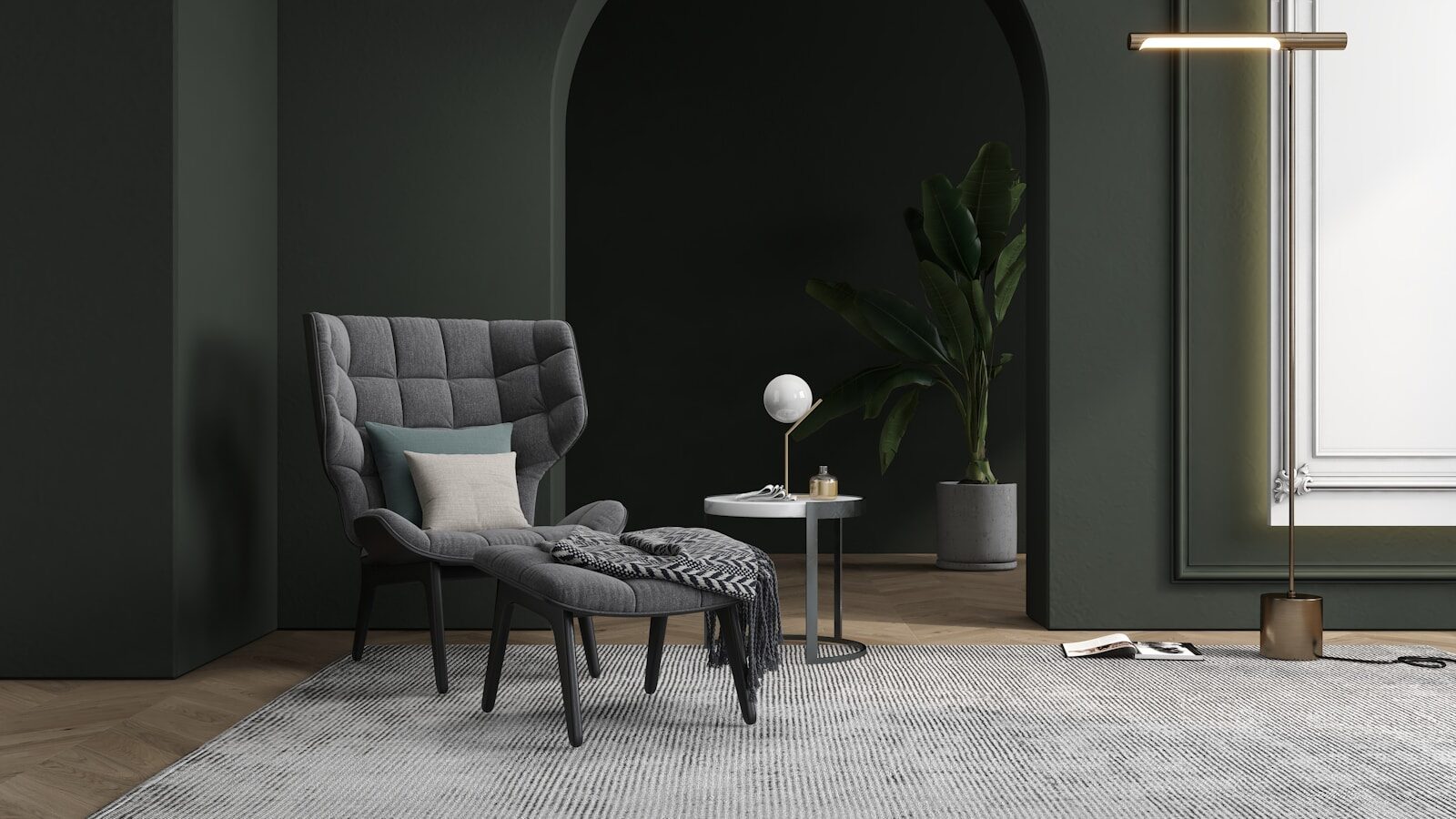
AI design tools are everywhere in 2026. Most of my clients have used one before they call me. They show me the render — and honestly, it usually looks beautiful. Balanced proportions, styled accessories, warm lighting, a coffee table centred on a rug.
Then I ask how they actually live in that room.
That is where the gap opens.
I am not here to tell you to throw the tools away. I use them myself at certain stages. But there is a real difference between what an algorithm renders and what a designer designs, and homeowners deserve to understand it before they make decisions based on a render that has never met their family.
Here are five things AI consistently gets wrong.
1. It Does Not Know Where Your Babies Crawl
A client sent me an AI-generated living room last year. It was objectively good aesthetics. The coffee table was centered on the rug. The accessories were styled the way you would see in a design magazine.
She had two children under three. Her babies spent most of their waking hours on that floor.
The coffee table in the render sat at exactly the height where a child pulls up to stand and catches the corner. The accessories on the side table were at arm-reach for an eighteen-month-old. The sofa fabric was ivory linen.
The AI optimized for visual appeal. That is what it was built to do. What it cannot do is ask how the family lives in the space, then design around the answer.
2. It Gets the Materials Wrong for Your Climate
A render that photographs beautifully in a studio setting can fall apart when you apply it to a real home in a real climate.
Tile that looks clean and continental in an AI render may crack in a cold-winter market. The organic flooring trending in California does not hold up in a high-humidity Gulf Coast home. Linen that looks fresh in a render reads impractical the first time you look at your actual household traffic.
Material selection is partly an engineering problem. The AI is solving an aesthetics problem. Those are not the same problem.
3. It Defaults to Symmetry, Which Is Not Always Right
AI-generated rooms trend toward visual balance. Everything is centered, paired, mirrored, matched. It looks composed. It photographs well.
Real rooms have focal points that fight symmetry. A fireplace that sits off-center. A window that changes the light on one side. A family heirloom that anchors one wall and cannot be moved. A designer looks at those constraints and creates tension on purpose. AI defaults to the safe version.
4. It Cannot Demo the Fabric
One of the most important things I do in a consultation visit is pour red wine on a fabric sample.
The wine beads. The client watches. They reach down and dab it off with one finger.
That is performance fabric, meaning scotchgard is woven into the weave at manufacturing, not sprayed on afterward. It is why I put white furniture into homes with toddlers, dogs, and wine clubs without hesitating. I spec it on every project.
An AI tool can suggest “performance fabric” as a category. It cannot know that this specific client needs to see the demo, that watching the wine bead is the moment they will actually believe white furniture is livable. The material recommendation and the decision are different events. The designer closes the gap between them.
5. It Cannot Do Anything While the Walls Are Open
Here is the one that costs homeowners the most money.
During a bathroom remodel, while the walls are open, there are decisions that can only be made at that stage. Wall blocking behind the shower, for example, where a grab bar or handrail may mount later. Installing that blocking during the rough-in phase costs almost nothing. Retrofitting it after the tile is up costs thousands, because you are redoing finished work.
AI generates what the finished room should look like. It does not know the construction sequence. It has no concept of “do this now or you cannot do it later.”
A designer knows the sequence. A designer asks the question. A designer specs the blocking before Carlos tiles that wall.
Use AI to Dream. Hire a Designer to Live In It.
AI design tools have a real role in the early stages of a project. They help clients discover what they want faster than a blank-page conversation. They let you test color combinations before you commit to paint.
But a render is not a design. A design is built for the family using the space, the climate they live in, the construction sequence that makes it possible, and the material decisions that hold up when real life happens to them.
That is a relationship between a designer and a household. No tool has cracked that yet.
Melody Stevens is the owner of Design on a Dime Interiors in Conroe, Texas, where she has worked with Houston-area families on full-service kitchen and bathroom remodels. More at designonadimeinteriors.com.