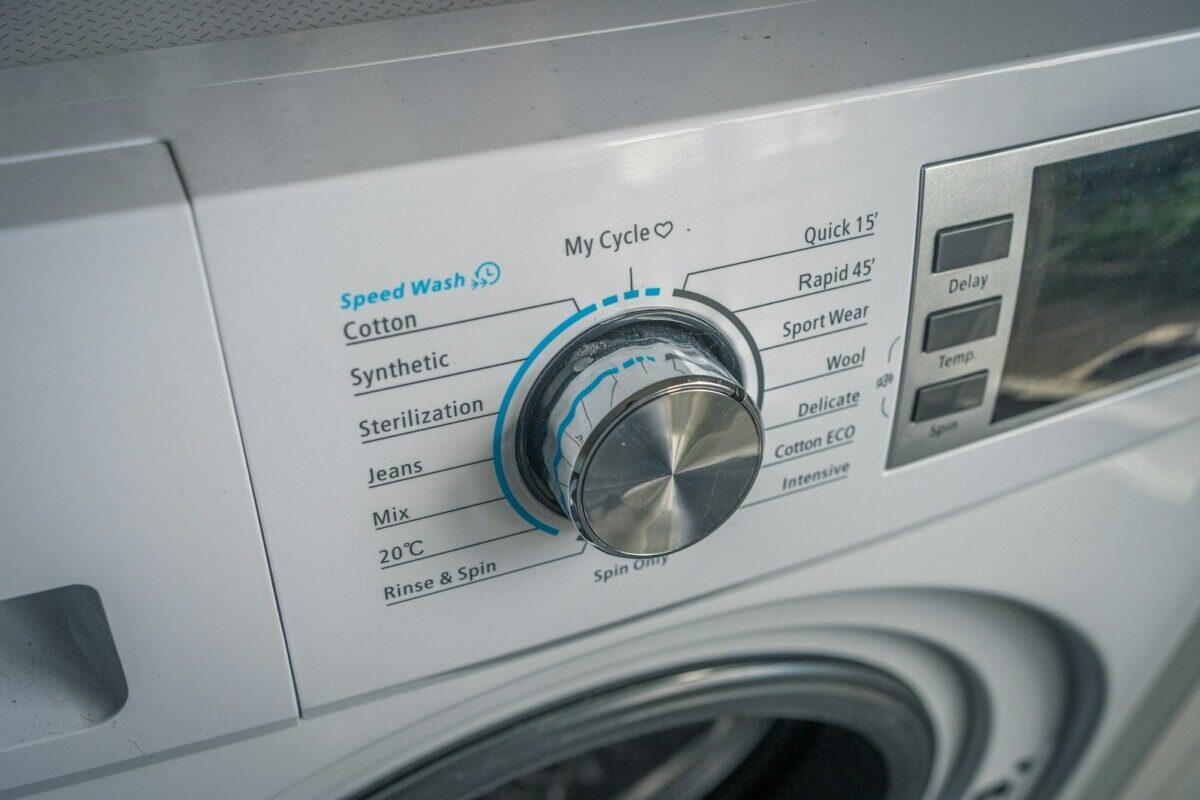
Around 16 million households across the UK own a tumble dryer — making it one of the most common appliances in British homes. It is also one of the most dangerous. Government fire statistics show tumble dryers cause 884 fires a year in the UK, and they remain the single biggest household appliance fire risk in the country, accounting for 57% of all appliance fires recorded in Wales over the last three years.
The scale of the problem is growing. According to the latest analysis of Home Office data by Electrical Safety First, accidental fires involving common white goods — tumble dryers, washing machines, dishwashers — now occur at least three times every single day across England, with 1,140 incidents recorded in the last year alone.
Now experts at Ecigone (ecigone.co.uk) are warning that millions of those households could be sitting on a fire risk they have never even considered and it comes down to one very simple oversight.
A new risk nobody is talking about
With around 5.5 million adults in the UK now vaping — the majority carrying their device in a pocket every day — fire experts say the chance of a forgotten vape ending up inside a tumble dryer load has never been higher.
The risk has sharpened further since June 2025, when the government’s ban on single-use disposable vapes came into force. With disposables off the shelves, almost every vaper in the country has switched to a rechargeable device — typically a compact pod kit small enough to sit unnoticed in a jacket or jeans pocket. These devices are used daily and are even easier to forget than the single-use units that preceded them.
The consequences of that oversight can be catastrophic. Vape-related fires have already surged 348% across the UK in just four years, rising from 89 incidents in 2020 to 399 in 2024, according to Freedom of Information data obtained from 39 fire and rescue services.
Why a tumble dryer is so dangerous
Every vape contains a lithium-ion battery. When that battery is subjected to the sustained heat and tumbling motion inside a dryer, it can trigger what experts call thermal runaway — an uncontrollable chain reaction where the cell rapidly overheats, releases flammable gases and ignites, often within seconds.
What makes lithium battery fires uniquely dangerous is that a burning cell produces its own oxygen, meaning it can keep reigniting even after it appears to have been extinguished. Internal temperatures during thermal runaway can exceed 1,000°C. A vape battery failing inside a tumble dryer, surrounded by dry clothing, creates exactly the conditions for a fire to spread fast — and potentially destroy a home.
Crucially, the battery does not need to be old, depleted, or visibly damaged. A fully charged, intact cell is equally capable of failing under thermal stress. Leicestershire Fire and Rescue Service has explicitly warned that lithium-ion batteries present a serious fire risk when subjected to heat, damage, or pressure — all three of which occur inside a running tumble dryer.
Vape experts at Ecigone say this is one of the most overlooked fire risks in British homes right now — and one of the simplest to prevent. Shane Margereson, vaping industry specialist at Ecigone, says the habit of carrying a vape in a pocket is so automatic that most people never think to check before loading the machine.
“A vape goes into your pocket in the morning and you stop thinking about it. That’s completely normal — but if that jacket or those jeans end up in the tumble dryer, you are putting a lithium-ion battery through sustained heat and movement. That is one of the most reliable conditions for triggering thermal runaway. The battery does not need to be faulty or damaged. Heat alone can do it.”
The team at Ecigone recommends every vaper follow these steps before every tumble dryer cycle.
Check every pocket before loading. This includes jacket pockets, hoodie pouches, jeans and any clothing worn during the day. A vape battery does not need to look damaged or depleted to be dangerous — a fully intact cell will still react to sustained heat.
Never run the tumble dryer overnight or when leaving the house. This is standard fire safety guidance, but it matters even more where there is any chance a device has been left in clothing. A fire that starts while you are asleep or out has significantly more time to take hold before anyone can respond.
If you find a vape that has been through a wash cycle, do not charge it. A battery exposed to a full wash cycle may appear undamaged but can fail unpredictably when charged. Take it to a designated electrical waste point rather than attempting to use it.
Register your tumble dryer at registermyappliance.org.uk. This ensures you are contacted directly if a recall or safety notice is issued for your model. As recently as December 2025, the Office for Product Safety and Standards issued an urgent alert covering around 85,000 heat pump tumble dryers made by Haier — sold under brands including Candy, Hoover, Baumatic, Caple, Iberna, Lamona and Montpellier — after a fault was found capable of causing the appliances to ignite during normal use.
Shane added: “Checking your pockets takes five seconds. The consequences of not doing it — a lithium battery fire inside a running tumble dryer, in a room you may not be in — can be catastrophic and permanent. It is one of the easiest risks in the home to eliminate completely.”