Written by Calum Maddock
Your garden fence is more than just a boundary. It is an essential part of your outdoor living space, offering privacy, security, and often beauty. With a wide range of different styles available, various materials, and customisation options, choosing the right fence for your space can completely transform your garden’s aesthetic and functionality. Whether you are aiming for a cosy private retreat or an open, decorative border, understanding the possibilities is the first step in creating your ideal outdoor space.
This guide by gardening expert Calum Maddock at HomeHow.co.uk explores various fencing types and creative styling tips to help you make an informed decision that perfectly complements your home and lifestyle.
Get Custom Panels for Garden Levels
If your garden has different levels at various heights, you may want to choose fencing panels that are customised to the slopes in your garden. Instead of lining your fencing panels at different levels, you may want to choose sloping panels to make the perimeter look much neater and to add a unique and sophisticated look. Custom panels will cost more. However, they can create a beautiful garden border.
Use Paints for Added Flair
You can spice up the look of your garden by using various colours of fence paints to make your fence panels really stand out. There are many exciting things that you can do with a bit of paint. You can create multi-coloured fences, create a feature fence panel with an interesting design, or you could even use your talents to create your own mural across your fencing panels.
Create Sections in Your Garden
If your garden is quite large, you can use fencing to create boundaries between the various sections of the garden. Depending on your personal taste and requirements, you could choose to use full-size fencing panels to completely separate the different areas, or you could use low fencing to create less obvious separations between sections.
Add Trellises
Trellises are a great addition to a fence as they allow you to add decorations in the form of ivy or flowers. Adding a trellis for decoration to your fence panels could be just the thing you need to make your garden look more exciting and aesthetically pleasing. Trellises come in various shapes, sizes, and colours.
Mount Shelves or Lights
If you want to make your garden a little bit more unique and exciting, you could mount some light shelves or lights on your fence. Shelves can provide you with a lot of unique possibilities. You can use the shelves for bird feeders or to attract insects such as butterflies. You could even create an outdoor kitchen area with shelves incorporated.
Close-Board Fence
Close board fence panels are the most common type of fence panel in the UK. These are made up of vertical feather-edge panes and are secured with horizontal boards. Close board fencing creates a private and secure screening around your garden. This type of fence is perfect for homes with pets or small children, as the panels can prevent them from escaping. The problem with these boards is that they need regular maintenance to make them last. If you don’t look after this type of fencing, it may start to crack or rot, at which point you will have to buy new fence panels. Regular treatment once per year is enough to keep these fence panels well-maintained.
Lap Panel Fence
Lap panel fencing is a great budget-friendly fence option. They usually feature horizontal boards that are overlapped with various vertical posts to improve privacy in your garden. They are also normally supported by gravel boards and timber or concrete posts, which help to make the fence last much longer. One of the problems with installing an overlapping fence like this is that it can be quite difficult to maintain. Also, damage to the boards can sometimes go undetected if they are not regularly checked over and maintained properly.
Picket Fence
Picket fencing is most commonly used in front gardens to border flowers or to border your landscaping. Picket fence panels are unique due to their evenly spaced vertical boards and pickets. The main benefit of picket fences is that they are low in cost and they are easy to customise and paint, so you can easily change up the aesthetic as needed. One of the downsides of picket fencing is that it can easily rot and is susceptible to termite infestation. With this in mind, it’s important to keep them well-maintained at all times. They can also warp when exposed to a lot of moisture, and this can cause the fence to fall apart.
Slatted Fence
Slatted fence panels are quite similar to close-board fence panels. However, these boards are fitted horizontally and feature slightly bigger gaps between them. Slatted panels are very durable and versatile, so you can easily customise them to suit your aesthetic. One of the problems with slatted fence panels is that they are not as private as some other fence types due to the gaps in the panels. There is also a lot of maintenance required, and there are more materials, so it may take longer to install.
Weave Fence
Weave fencing is a traditional style fence panel that features a unique woven design. This type of panel is also one of the most aesthetically pleasing types of fence. It can also work as an effective divider to separate areas of your garden. This type of fencing requires a lot of maintenance, especially when it is made from timber. To save on some of the maintenance requirements, you may wish to opt for PVC weave panelling. Weave fencing can become brittle and crack when exposed to harsh weather conditions.
Lattice Fence
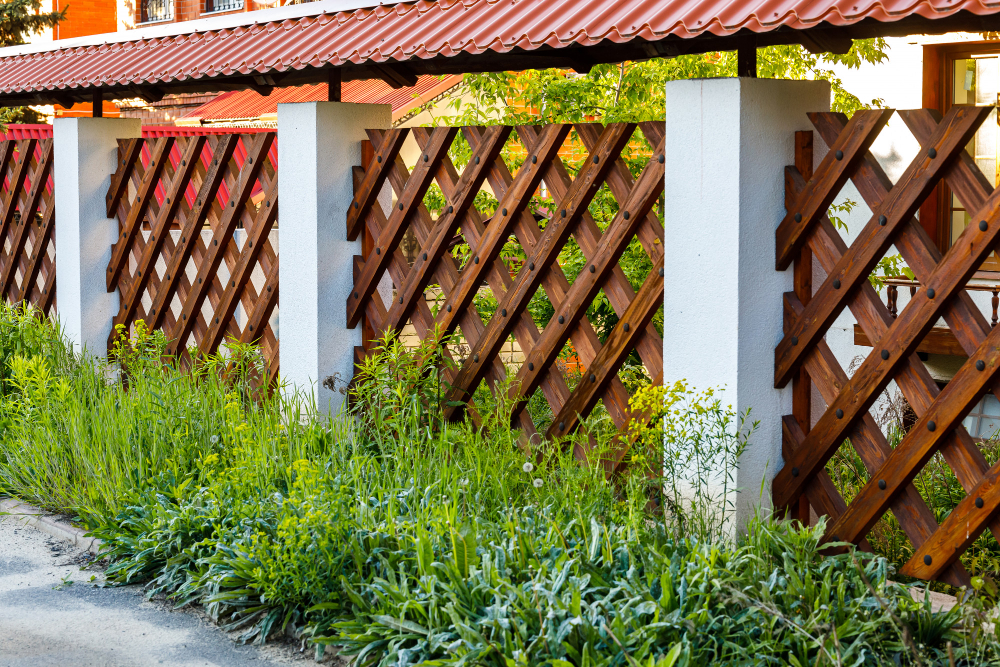
Lattice fence boards are mostly used as a decorative style of fencing. These fences have strips of wood, vinyl, or metal that are connected together to create diamond shapes. This type of fence is not the best choice if you’re looking for privacy, as the holes are quite large. These fences are also not as durable as other fence types, as they are mostly used for decorative purposes.
Final Thoughts
As you can see, there is a wide range of fencing choices, each with its own unique benefits and considerations. From the robust privacy of close-board panels to the charming openness of a picket fence, and the artistic flair of custom designs or painted murals, your fence can be so much more than a simple boundary.
By carefully considering your garden’s specific needs, your personal style, and the maintenance requirements of each option, you can select and enhance a fence that not only provides security and definition but also elevates the overall beauty and enjoyment of your outdoor space for years to come.
About the author
Calum Maddock is a UK-based landscaper with over fifteen years of experience in the industry. As a gardening expert for HomeHow, Calum offers his expert advice to tradespeople and homeowners around the globe. He has also been featured as a gardening expert for a range of reputable publications.