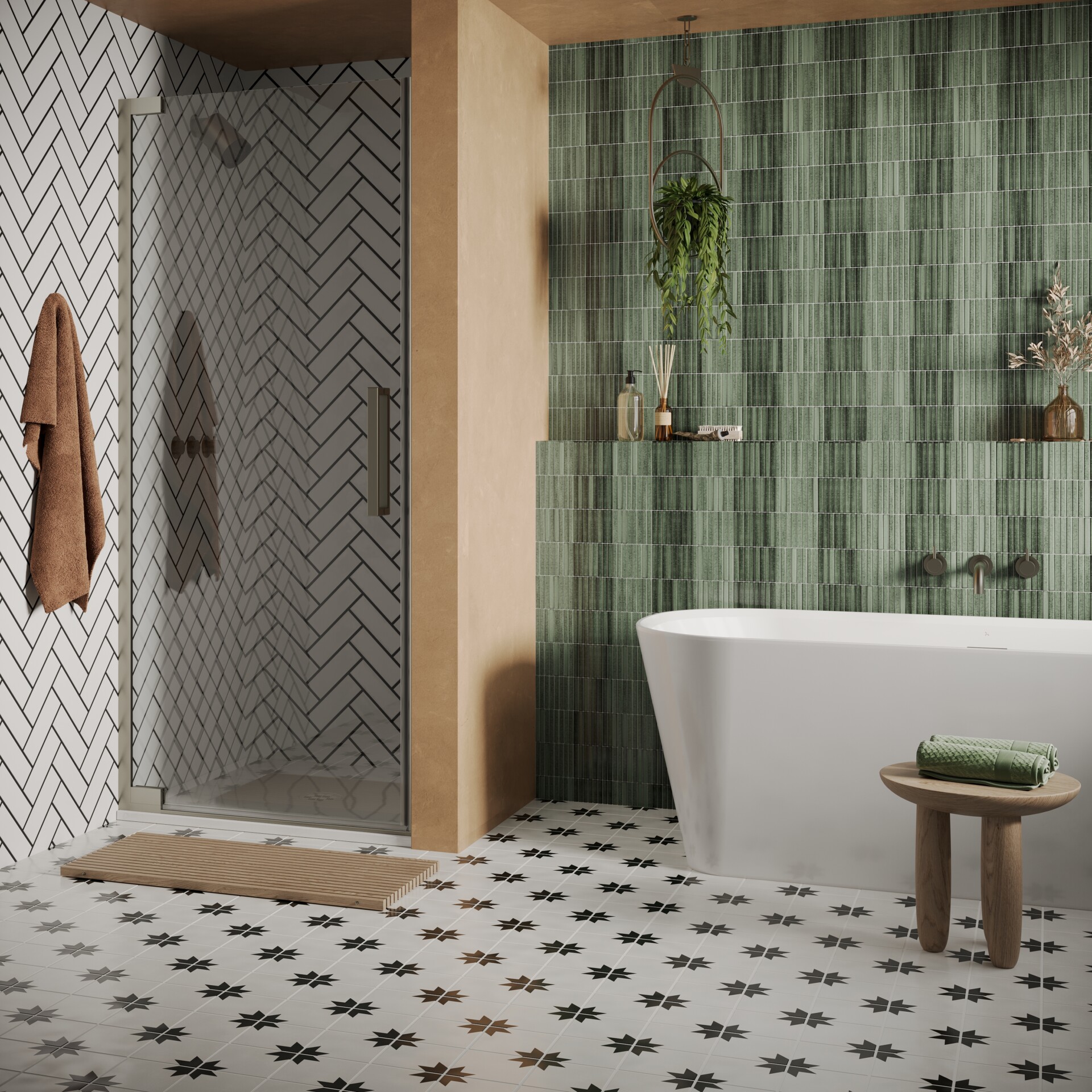
Survey of 2,000 UK adults finds relaxation leads Gen Z bathroom priorities, pointing towards a possible ‘hybrid bathroom’ for getting ready, switching off, scrolling, and self-care – while Boomers put function and practicality first
For Gen Z and Millennials, the ideal bathroom is a relaxing, multipurpose space able to accommodate a wide range of activities – from skincare routines to media, meditation, and even yoga – according to new research commissioned by bathroom retailer Sanctuary Bathrooms.
The OnePoll survey of 2,000 UK adults found that relaxation is taking over as the top bathroom priority for Gen Z and Millennials, compared to functionality for adults overall, while these generations are far more likely than the average adult to use the room for activities such as checking social media (3 in 5), watching TV (1 in 2), learning a new language (1 in 4), practising mindfulness or meditation (40%), and even doing yoga or stretching (24%).
Key findings*
- A ‘relaxing’ environment is the most important bathroom characteristic for Gen Z (40%) and Millennials (42%), while functionality is most important for UK adults overall (46%).
- Boomers are more likely than any other generation to prioritise functionality (55%) and practicality (53%) in a bathroom, while only 1 in 4 Gen Z see practicality as a desirable bathroom trait.
- Gen Z are twice as likely as UK adults overall to want an atmospheric (12% vs. 6%) and high-tech (10% vs. 5%) bathroom.
- Gen Z are eight times as likely as Boomers and twice as likely as Millennials to select photogenic or ‘Instagrammable’ as a desirable bathroom characteristic.
- Gen Z and Millennial bathroom activities span audio, scrolling, and self-care, including listening to music (66%; 70%), scrolling news or social media (62%; 66%), mindfulness/meditation (40%), and even yoga (24%).
*Respondents could select multiple answers.
Commenting on the findings, James Roberts, Director at Sanctuary Bathrooms, says: “The way younger generations are using the bathroom nowadays – as a ‘second living room’, almost – hints at why a relaxing environment is so important to them, so much so that it trumps practicality by up to 15 percentage points. Whether serving as a media room, makeshift yoga studio, or self-care space, it’s clear that, for many young adults, how a bathroom feels as a space to unwind in is becoming just as important as, if not more important than, how it functions.”
What could this mean for bathroom design? The Gen Z bathroom brief
As these preferences reach renovation briefs, the hybrid bathroom could have several settings: brisk and bright in the morning, softer at night, and flexible enough for whatever happens in between, without becoming harder to use, clean, and maintain.
Below, Sanctuary Bathrooms Showroom Manager and 3D Bathroom Designer Paul Wells explains which features and design themes he expects the Gen Z bathroom brief to include:
1. The calming sanctuary
“The pursuit of a relaxing, cosy environment for evening activities – from listening to music and podcasts to meditating – could show up in soft, hygge-inspired details such as warm-neutral paint and panelling, light natural-wood furniture, muted stone tiling, soft tactile accessories, and low-level lighting beneath vanities and shelves.”
“Rounded forms and elements of biophilic design, such as a hanging plant or other such well-placed greenery, could also be used to create a sense of calm.”
“Comfort could similarly come from a spa-style shower, thermostatic controls, a hand shower, heated floor, or towel warmer, as long as circulation, access, and easy cleaning are not squeezed out.”
2. One room, several modes
As the bathroom increasingly takes on the role of a ‘second living room’ for Gen Z and millennials – accommodating everything from multi-step morning skincare routines to evening reading, podcasts, and television – flexible day-to-night lighting and zoning are likely to become even more central to renovation briefs.
Wells notes: “That could mean pairing bright, colour-accurate mirror and task lighting for the morning routine with dimmable ambient fittings for evening soaks and scrolling, or choosing an LED bathroom mirror with adjustable colour temperatures to shift seamlessly between day and night modes.”
“Zoning will be equally important in supporting this broader range of activities. Larger bathrooms might use structural elements such as half-height walls and glass screens, while compact spaces and tighter budgets could rely on strategic lighting, recessed shelving, a dry ledge, or shifts in colour and texture to distinguish the ‘getting-ready zone’ from a relaxation area, likely centred around the bath.”
Director at Sanctuary Bathrooms, James Roberts, adds: “A hybrid bathroom is not a living room with a bath in it. It’s a bathroom that has been deliberately designed to accommodate different uses; one that has flexible lighting, zoning, and the right fixtures, fittings, and accessories to enable switching between these different uses: bright and efficient in the morning, calmer for a long shower or soak, and comfortable enough for the music, scrolling, or mindfulness people already bring into the room. Function still matters; the difference is that it may no longer be the whole brief.”
3. Media and audio, seamlessly integrated
Wells says: “Music, podcasts, and scrolling are already happening in the bathroom, so device-friendly details could make them feel less improvised. Bathroom-rated speakers, for example, or a secure, eye-level shelf in the dry zone as a place to safely store your phone or tablet without balancing it on a wet surface.”
“For the 40% who have practised mindfulness or meditation in the bathroom, the acoustics likely matter, too. Quiet extraction fans, soft-close doors and drawers, and thoughtfully placed textiles could take the edge off hard-surface echo, helping the room feel more like a retreat.”
- A place to pause, designed in
Wells says: “If the bathroom is expected to accommodate relaxing, self-care activities like yoga and meditation, clear floor space may start to matter more. Recessed mirror cabinets, wall-hung vanities, shower niches, and even bath-panel storage could all be used to free up valuable floor space while keeping toiletries, towels, and clutter out of view.”
“Equally valuable could be creating an intentional space or nook in the bathroom for a moment of Zen. Where the footprint allows, a compact bench, wooden spa stool, or accent chair in the dry zone can provide a proper pause point, without permanent fixtures or loss of flexibility – an especially important consideration for renters.”
- More smart technology
Smart technology could also move higher up the bathroom brief as Gen Z enter the renovation market. Although only 10% select ‘high-tech’ as a priority, that makes them five times as likely as Boomers (2%) and twice as likely as UK adults overall (5%) to do so.
Wells notes: “Depending on budget, the higher desire among Gen Z for smart technology could lead to design schemes featuring things such as Bluetooth mirrors that soundtrack the morning routine, smart showers with personalised settings, programmable underfloor heating that warms the room before an early start, touchless sensor taps, and smart bidet toilets.”
“Rather than technology for its own sake, the appeal is likely to lie in fittings that make the bathroom more comfortable, personalised, and intuitive while remaining durable and easy to maintain.”
Roberts adds: “Overall, what may change is that technology is designed into the room instead of brought in as an afterthought. The Gen Z ‘hybrid’ bathroom is likely to feel connected but not overly futuristic, with technology that earns its place, rather than looking like a room full of screens.”
- Camera-ready, not trend-led
Gen Z’s interest in a photogenic or ‘Instagrammable’ bathroom remains modest at 8%, but the results reveal a clear generational contrast: they are eight times as likely as Boomers (1%) and twice as likely as Millennials (4%) to rank it among their top three priorities. Combined with the 12% of Gen Z who favour an ‘atmospheric’ bathroom, this suggests a stronger appetite among younger adults for expressive, visually distinctive design.
Wells says: “That need not mean creating a bathroom purely as a social-media backdrop. Instead, we will likely see greater demand for one memorable focal point – a sculptural mirror, confident colour scheme, botanical wall panel, or beautifully lit tile surface – that gives the room personality without overwhelming it.”
“Ultimately, although social media aesthetics are becoming more of a consideration in bathroom design, the fundamentals – electrical safety, ease of cleaning and maintenance, and hardwearing products that stand the test of time – will likely still set the rules. The strongest schemes will start with durable fixtures and practical materials, then add mood, colour, and technology in layers that can be maintained or changed.”
Roberts concludes: “Taken together, our survey points towards a bathroom brief written as much around moments as products: get ready, reset, listen, scroll, stretch, and switch off. Gen Z bathrooms may not be bigger or packed with technology; they may simply be better at changing mood, with lighting, storage, seating, and connected details working harder around the durable essentials. Of course, budget, house ownership status, and room size will all shape how far that brief can go.”