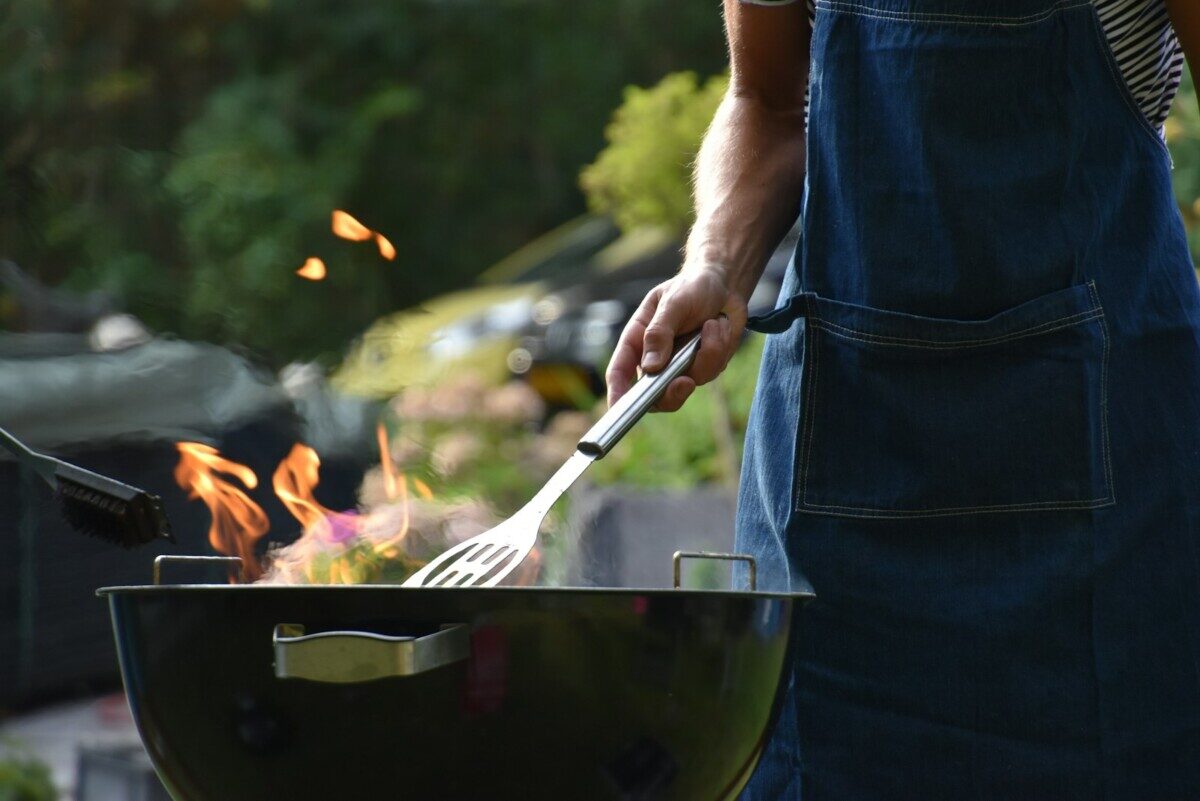
With the UK baking in a record heatwave, fire experts warn that where you place your barbecue could be the difference between a great afternoon and a devastating house fire
Fire up the grill, but think about where you put it. That’s the urgent message to millions of barbecue fans this week, as the record-breaking heatwave leaves gardens across the country dangerously dry.
Barbecuing is more popular than ever. More than half of UK adults, around 52%, say they will host or attend a barbecue this summer, and in the lockdown summer of 2020 Brits fired up a record 190 million of them, an average of three each.
But all that grilling comes with a serious risk. UK fire services have attended more than 3,900 barbecue-related incidents since 2022, and the toll is spread right across the country. Scotland recorded the most, with 627 barbecue fires, while the London Fire Brigade dealt with 332 and the highest number of casualties at 17. Essex recorded 277, South Wales 255 and Kent 168.
A garden like a tinderbox
The danger is far worse in a heatwave. After a long, dry, hot spell, lawns, fences and foliage have turned to tinder, and it takes very little for a stray spark or a knocked-over grill to start a blaze.
We have seen exactly how quickly it can spiral. During the 40C heatwave of July 2022, the London Fire Brigade had one of the busiest weeks in its history, tackling more than 1,000 fires in a single week, as crews warned the dry ground had been left “like a tinderbox.”
A lit barbecue makes it worse. Charcoal models can reach more than 400C, and the outside of the unit stays scorching hot long after you have finished cooking. Place that near anything that can burn and you have a fire waiting to happen.
The wooden fence problem
The most common hazard in a British garden is the humble wooden fence. Huge numbers of UK homes are now boxed in by timber fence panels, sheds, wooden decking and, increasingly, artificial grass, and every one of them is flammable.
Safety guidance is clear that a barbecue should never be lit against or close to a fence, shed, decking or the wall of your house, with a clear space kept around it and nothing flammable overhead, such as tree branches, parasols or awnings.
Stand it on stone or brick
The surface underneath your barbecue matters too. Stone, brick and concrete are non-combustible, meaning they physically cannot catch fire, which is why experts say a solid stone or brick base is the safest place to stand a barbecue, rather than grass, decking or artificial turf.
Luke Clarke, spokesperson for natural stone experts Britannia Stone, said: “The single best thing you can do is set your barbecue up on a hard, non-combustible surface like a stone or brick patio. Stone, brick and concrete simply will not catch fire, and a paved area gives you a flat, stable base, so there is far less chance of the barbecue tipping over.
“What you really want to avoid is lighting up on or right next to anything that burns, and that includes wooden decking, fence panels, sheds and artificial grass, which so many homes have now. The good news is most of us already have a stone or paved patio, so the safest spot is usually right there, well away from the fence. Keep it on solid stone or brick, give it plenty of space, and never leave it unattended.”
Fire services advise some simple rules. Never use a barbecue on a balcony or indoors, never use petrol or other accelerants to light it, and keep children and pets well clear. Have a bucket of water or sand nearby, and never walk away and leave it unattended.
When you have finished, make sure it is completely out, as smouldering ashes can stay hot for hours and give off deadly carbon monoxide. And on the very hottest, driest days, the safest barbecue may be no barbecue at all.