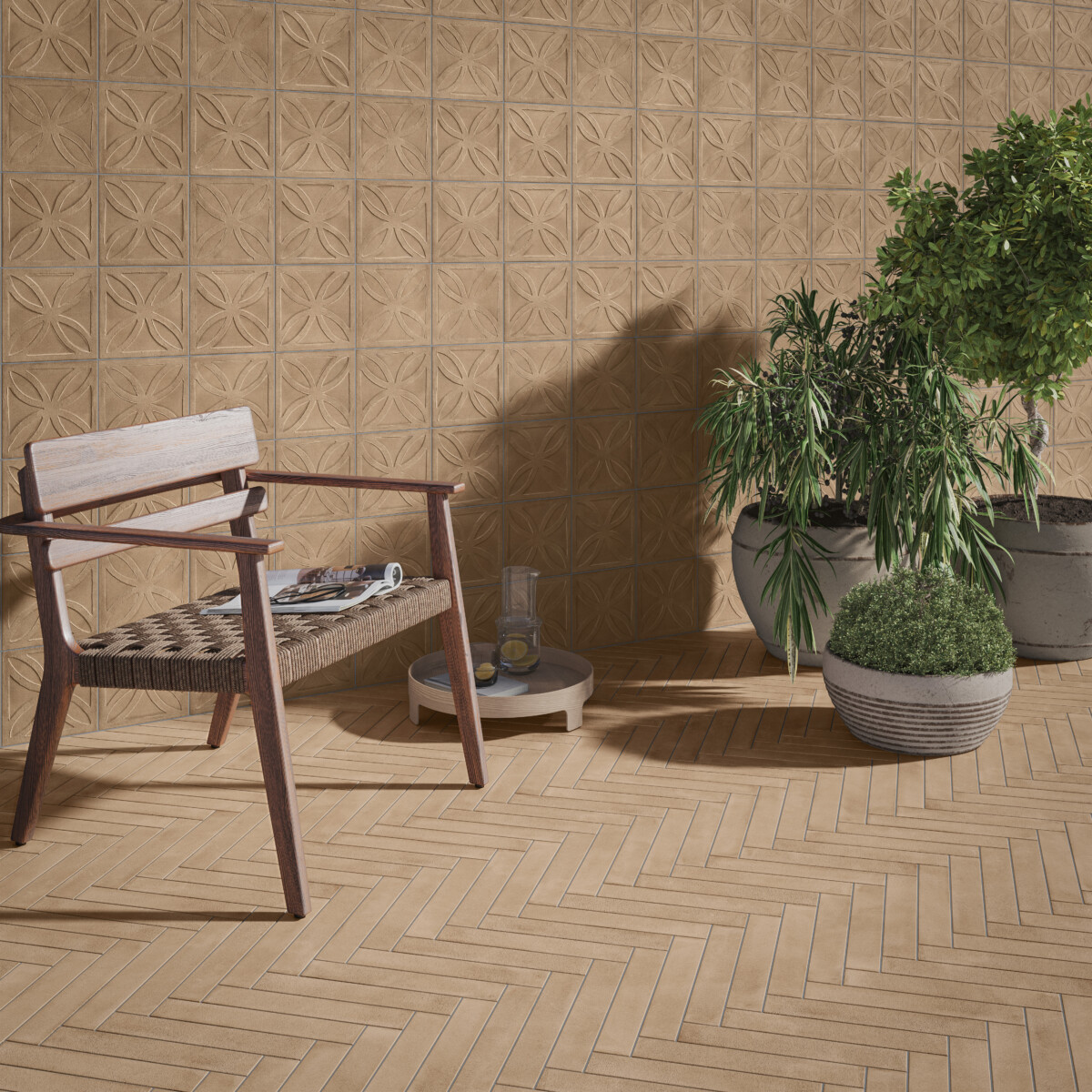
With so many of us living and leading fast-paced lifestyles it’s no wonder there’s a growing trend towards quieter and more considered interiors that draw on nature and the world around us. The “Natural Pause” trend captures this perfectly, creating homes that allow you to properly switch off, and create interiors that soften the overwhelm that sometimes comes with everyday life.
Here, Harriet Goodacre, style and interiors consultant at Topps Tiles, shares her advice on how to embrace this approach.
“If you’re looking to create a home that feels calm and tranquil, the best starting point is your colour palette. Injecting softer, nature-inspired tones into your home, such as warm browns, gentle and earthy terracotta, chalky whites and soft, washed blues, can create a more soothing space. These colours tend to sit quietly and harmoniously in a room rather than demanding attention in a way bolder colour choices would, which helps create that slower, more relaxed feel.
“To create depth and interest, layering those tones together is key. Pick shades that complement each other and enhance your space, rather than create any sharp or noticeable contrasts. This style is all about creating a sense of serenity in the home, so your choice of colours, décor and accessories need to gently work together.
“For example, pairing a soft clay-toned tile with a slightly darker grout can give you a hint of definition without overpowering things. It keeps the overall look unified whilst still adding a point of interest to your interiors. And tiles with a rustic or handmade feel can help to create that natural, lived in but stylish feel. You want to pick tiles that have a bit of variation in their tone. Think a softly uneven glaze, or subtle ridging and texture, as that all helps to create a sense of tactility and stop a room from feeling flat or overly polished. In kitchens or bathrooms, using tiles with a gently fluted or ribbed surface can provide texture in a subtle way, catching the natural light throughout the day and adding movement without the need for a busy pattern or bold colour.
“Natural materials also play a big role in this trend. Stone-effect tiles, lightly veined marble finishes or even terrazzo with a soft, flecked appearance, all help to bring that connection to nature into your home. These all have an organic quality that feels grounding, especially when paired with simple cabinetry, wooden décor and metal accents in softer finishes, such as brushed gold, aluminium or steel.
“Linear formats, like slim rectangular tiles, shouldn’t be overlooked as they’re great for creating a gentle pattern across a wall. Plus, when laid vertically, they can draw the eye upwards and make a room feel more open, while a horizontal layout can help elongate a space and create a sense of calm and continuity.
“If you prefer something a little more decorative, subtle patterned tiles can still work beautifully in this trend. Small-scale motifs such as delicate floral-inspired designs, add interest without overwhelming the room. The key is to keep the colours soft and the accessories to a minimum so that everything feels well balanced and not like it’s trying to compete with one another.
“You may also want to consider larger format tiles in warm neutral tones. They create a seamless base for walls or floors which allows the rest of the room to breathe. A lightly textured stone or a gentle concrete effect works well here, especially in open-plan living spaces, such as a kitchen diner or kitchen living space, where you want that feeling to flow from one area to the next.
“One of the most important things to remember with this look is that it isn’t about filling every space and surface in the home with accessories. Leaving areas uncluttered, allowing materials to speak for themselves and choosing finishes that feel considered rather than overly styled, all contribute to that sense of stillness and slow living.”
For more information, visit www.toppstiles.co.uk.